The Budget Setup: Best Agentic AI Development Tools for Solo Devs

TL;DR: The Top Recommendations
Alright, let’s be real. The hype around “agentic AI” sounds like something plucked straight from a sci-fi novel – autonomous AI, making decisions, building things, probably taking over the world while you sip your morning coffee. For a solo dev, achieving **the budget setup** for agentic AI often feels more like navigating a budget black hole and a steep learning curve. But fear not, my intrepid, caffeine-fueled friend! We’ve scoured the digital wilderness to find the best agentic AI development tools that won’t require you to sell a kidney. We’re talking open-source gems, generous free tiers, and frameworks designed to get your agents up and running without an enterprise budget. Think LangChain for ultimate flexibility, CrewAI for multi-agent magic, and AutoGen for robust conversational flows. Dive in; your future AI sidekick awaits! To fully understand the broader framework, refer to our master guide on autonomous solopreneur business 2026. Applying a structured approach to the budget setup ensures measurable long-term results.
Let’s confess something right out of the gate: for a long time, the phrase “Agentic AI” made me picture a bunch of highly paid researchers in gleaming labs, not a solo dev in their pajamas, wrestling with Python errors and a rapidly diminishing bank account. The dream of building an autonomous AI that can plan, execute, and even course-correct tasks is alluring, but the reality often involves complex architectures, hefty cloud bills, and a PhD in prompt engineering. Or so we thought. Teams and operators who prioritize the budget setup consistently outperform legacy benchmarks.
The good news? The landscape is changing faster than my ability to remember my own login credentials. What was once the domain of well-funded research teams is now increasingly accessible to individual developers. But here’s the kicker: many existing guides gloss over the brutal truth for solo devs – budget, ease of deployment, and the sheer mental overhead of learning a new paradigm. We’re not just looking for “powerful”; we’re looking for “powerful and doesn’t demand a second mortgage.” This isn’t about leveraging enterprise-grade solutions; it’s about using what works without breaking the bank or your spirit. Evaluating your workflow through the lens of the budget setup eliminates critical bottlenecks.
This guide cuts through the noise. We’re diving deep into the world of agentic AI, specifically through the lens of a solo developer with a finite budget, aiming to help you achieve **the budget setup**. We’ll identify the best agentic AI development tools that balance capability with cost-effectiveness, ease of use with flexibility, and community support with robust features. Forget the corporate speak; we’re talking about tools that actually flow with your solo workflow. If you’re tired of tutorials that assume you have an MLOps team on speed dial, you’re in the right place. Let’s build some agents, shall we? Modern frameworks for the budget setup combine automation with strategic human oversight.
1. LangChain: The Swiss Army Knife (with a learning curve) — The Budget Setup
If you’ve dipped even a toe into the Generative AI pool, you’ve probably heard of LangChain. It’s less a single tool and more a comprehensive framework for developing applications powered by language models. Think of it as a set of LEGO bricks for building complex LLM applications, including agents. While it’s incredibly powerful and flexible, giving you fine-grained control over every aspect of your agent, it also comes with a notable learning curve. For the solo dev, this means spending quality time with documentation and tutorials, but the payoff is immense control and versatility. It integrates with almost every LLM, vector database, and tool under the sun, making it a foundational piece for many agentic projects. Sustainable progress in the budget setup depends on consistent execution and reliable telemetry.
Key Benefits
- Unparalleled Flexibility: Build custom chains, agents, memory systems, and tools. You’re limited only by your imagination and coding prowess.
- Massive Ecosystem Integration: Connects to virtually any LLM provider (OpenAI, Anthropic, Hugging Face), vector store (Pinecone, ChromaDB, Weaviate), and external API.
- Active Community & Documentation: With its widespread adoption, finding help, examples, and community solutions is relatively easy. The official LangChain documentation is vast and constantly updated.
- Open-Source Core: The base framework is free to use, develop with, and contribute to.
- Rapid Prototyping: Despite the initial learning curve, once you grasp the core concepts, you can rapidly prototype complex agent behaviors.
Pricing
LangChain itself is open-source and free. Your primary costs will come from the underlying LLM API calls (e.g., OpenAI, Anthropic), vector database hosting (some have free tiers), and any cloud compute for deployment. For solo devs, local development with open-source LLMs or generous free tiers for cloud services can keep costs minimal during the prototyping phase. Expect to pay per token for commercial LLMs. Integrating the budget setup into daily operations unlocks compounding efficiency gains.
Pros & Cons
LangChain’s greatest strength is its flexibility, allowing you to craft highly specialized agents. However, this flexibility can also be a double-edged sword for solo devs, leading to decision paralysis and a steeper initial learning curve compared to more opinionated frameworks. Debugging complex chains can be challenging. Its open-source nature means you’re building a lot of the infrastructure yourself, which is great for control but taxing on time. For foundational understanding of agent architecture, it’s invaluable, but be prepared to roll up your sleeves. We often recommend solo devs spend some time with LangChain to grasp the core concepts before moving to more specialized tools, or use it when they need truly unique agent capabilities that other frameworks don’t easily offer. As industry standards evolve, mastering the budget setup remains a decisive competitive advantage.
2. CrewAI: Orchestrating Your AI Dream Team
If LangChain is the LEGO set, CrewAI is more like a specialized robotics kit designed for multi-agent systems. Born from a desire to simplify the orchestration of collaborative AI agents, CrewAI focuses specifically on defining roles, tasks, and hierarchical communication among a “crew” of agents. This makes it incredibly intuitive for building scenarios where different agents need to work together, delegate tasks, and even debate to achieve a common goal. For solo devs, this framework drastically reduces the boilerplate code often associated with complex multi-agent setups, allowing you to focus on defining the behavior of your agents rather than the underlying communication protocols. Every phase of the budget setup benefits from clear metrics and iterative refinement.
Key Benefits
- Simplified Multi-Agent Orchestration: Designed from the ground up for defining agents with specific roles, tasks, and process flows.
- Intuitive Syntax: Pythonic and easy to read, making it quicker to define complex multi-agent interactions. The CrewAI quickstart guide gets you productive fast.
- Focus on Collaboration: Excellent for agents that need to brainstorm, research, write, and critique each other’s work.
- Integrates with LangChain: You can often use LangChain tools and agents within CrewAI, offering a powerful combination for advanced users.
- Growing Community: Rapidly gaining traction, leading to more examples, tutorials, and community support for specific use cases.
Pricing
CrewAI is open-source and free to use. Like LangChain, your primary costs will stem from the LLM APIs you choose to integrate (e.g., OpenAI, Anthropic) and any external tools or databases your agents interact with. Its efficiency in managing multi-agent workflows can potentially reduce token usage compared to manually prompting multiple LLMs for similar tasks, offering indirect cost savings for solo devs. Applying a structured approach to the budget setup ensures measurable long-term results.
Pros & Cons
CrewAI shines when you have a clear vision for how multiple agents should interact to solve a problem. It abstracts away much of the complexity of agent communication, allowing solo devs to build sophisticated workflows quickly. The opinionated structure is a huge pro for speed but can be a con if you need highly unusual communication patterns that don’t fit its model. It’s less about building individual agent components from scratch (like LangChain) and more about arranging and directing a team. For those looking to quickly deploy a “research team” or a “content creation agency” powered by AI, CrewAI is a top contender. It’s also a great way to explore the foundational principles of agentic system design in a practical, hands-on manner. Teams and operators who prioritize the budget setup consistently outperform legacy benchmarks.
3. AutoGen (Microsoft): Conversational Agents for Complex Tasks
Developed by Microsoft, AutoGen is another powerful framework for building multi-agent conversational systems. Where CrewAI often focuses on a structured workflow, AutoGen excels at fostering more open-ended “conversations” or debates between agents to solve tasks. It allows developers to define a collection of agents that can communicate with each other, execute code, and even involve human feedback in the loop. This makes it particularly strong for scenarios requiring iterative problem-solving, code generation and execution, or scenarios where agents need to collaborate to refine a solution through discussion. For solo devs, it offers a robust way to automate complex, multi-step processes that might otherwise require a lot of manual prompting and oversight. Evaluating your workflow through the lens of the budget setup eliminates critical bottlenecks.
Key Benefits
- Flexible Agent Communication: Supports various communication patterns, including round-robin, sequential, and conditional message passing.
- Human-in-the-Loop Capabilities: Seamlessly integrate human input and feedback into agent conversations, great for debugging and refinement.
- Code Execution and Verification: Agents can generate and execute code (e.g., Python scripts) within a safe environment, and even verify outputs.
- Powerful for Complex Problem Solving: Ideal for tasks requiring iterative refinement, debugging, or collaborative code generation.
- Backed by Microsoft Research: Benefits from ongoing research and development, ensuring cutting-edge features and stability.
Pricing
AutoGen is open-source and free, available on GitHub. Your costs will primarily be driven by the LLM API calls, similar to LangChain and CrewAI. The framework is designed to be efficient, but complex multi-agent conversations can still accumulate token usage. However, its ability for agents to autonomously refine tasks can lead to more optimal solutions and potentially fewer manual iterations, saving both time and potential token costs. Modern frameworks for the budget setup combine automation with strategic human oversight.
Pros & Cons
AutoGen is a fantastic choice for solo devs who need agents to perform complex tasks that might involve code execution, data analysis, or a series of back-and-forth discussions. Its strength lies in its ability to simulate collaborative work environments. The learning curve is moderate; it’s less daunting than raw LangChain but offers more flexibility than the highly structured CrewAI for certain tasks. A potential drawback is that its conversational nature can sometimes lead to longer processing times if agents get into extended debates. However, for tasks like automated data analysis pipelines or complex software development tasks, AutoGen provides a powerful and often cost-effective solution for a solo developer to automate their workload. Thinking about keeping your agent’s data secure? While not directly related to agent framework choice, understanding the importance of confidential computing in an AI-driven enterprise can inform how you think about securing sensitive information your agents might handle. Sustainable progress in the budget setup depends on consistent execution and reliable telemetry.
4. OpenAI Assistants API: The Managed Agent Experience
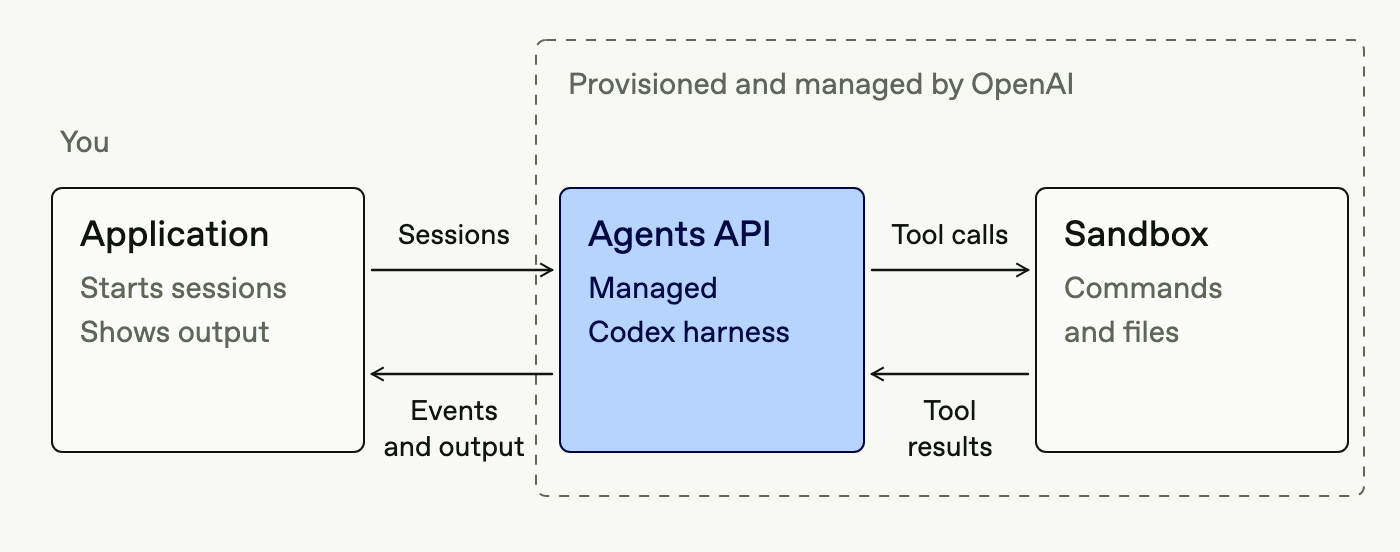
For solo devs who want to offload some of the infrastructure and complexity of agent management, OpenAI’s Assistants API offers a compelling managed service. Rather than building agents from scratch with a framework, you define “Assistants” with specific instructions, tools (like code interpreters, retrieval, or custom functions), and persistent threads for conversations. OpenAI handles the state management, context windowing, and tool calling, significantly reducing the amount of backend code you need to write. This means you can focus almost entirely on the agent’s instructions and the functions it needs to access, making it incredibly fast to get a functional agent up and running, especially for customer service, data analysis, or interactive applications. Integrating the budget setup into daily operations unlocks compounding efficiency gains.
Key Benefits
- Managed State & Context: OpenAI handles conversational context and memory across turns and sessions, simplifying development.
- Integrated Tooling: Built-in Code Interpreter and Retrieval (RAG) tools are easily accessible, plus support for custom function calling.
- Rapid Deployment: Less code to write for core agent logic means faster prototyping and deployment for many use cases.
- Persistent Threads: Conversations persist, allowing users to pick up where they left off without losing context.
- Cost-Effective for Specific Use Cases: Pricing is based on API usage, with generally reasonable rates for the capabilities provided.
Pricing
The Assistants API pricing is based on tokens consumed by LLM models, retrieval (per GB/day), and code interpreter sessions (per session). While not free, it can be very cost-effective for solo devs who value convenience and rapid deployment, as it saves significant development and debugging time. OpenAI offers a generous free tier for new users to experiment, and the pay-as-you-go model keeps initial investment low. It’s a compelling option if you’re trying to build an agent without a massive upfront commitment, similar to how one might carefully select tools for self-custody of digital assets, balancing convenience with control. As industry standards evolve, mastering the budget setup remains a decisive competitive advantage.
Pros & Cons
The Assistants API is a dream for solo devs who want to build functional agents quickly without getting bogged down in the intricacies of framework implementation. Its managed nature means you spend less time on plumbing and more on the agent’s personality and capabilities. However, the trade-off is less control and flexibility compared to open-source frameworks. You’re locked into OpenAI’s ecosystem and model choices, which might be a concern for some who prioritize vendor independence or need to use specific open-source LLMs. For many common agentic tasks, particularly those facing end-users, the ease of use and reduced development time often outweigh these limitations, making it an excellent choice for solo developers focused on delivering value rapidly.
How We Conducted Our Research
Building this list wasn’t just about throwing darts at a board of popular tools. As a solo dev myself, I know the pain points: the budget constraints, the limited time, and the sheer mental exhaustion of sifting through endless documentation. We approached this with a pragmatic, solo-dev-centric mindset, focusing on criteria that genuinely matter when you’re the only one on the team:
- Pricing: This was paramount. We looked for open-source solutions, generous free tiers, and pay-as-you-go models that wouldn’t surprise you with a massive bill. The “free” part of open-source is great, but we also considered the cost of underlying LLM API calls and compute resources. Can you develop locally? Are there easy cloud credit options?
- Features: Beyond just “agentic capability,” we dug into features specifically beneficial for solo devs. Does it offer good memory management out of the box? Can it easily integrate with common tools (APIs, databases)? Does it support code execution? How complex is it to define tasks and tools? We identified the “must-haves” that streamline development for one person.
- Ease of Use & Learning Curve: A solo dev doesn’t have a team of experts to consult. We evaluated how straightforward it is to get started, the quality of documentation, the availability of tutorials and examples, and the intuitiveness of the API. Less time spent wrestling with setup means more time building.
- Community & Support: When you hit a wall (and you will), a strong community, active forums, and responsive GitHub issues are your best friends. We looked for tools with vibrant communities where answers are readily available, minimizing frustrating solo debugging sessions.
- Negatives: Transparency is key. We didn’t just highlight the good; we debugged the missing features, the steep learning curves, and potential vendor lock-in. Understanding the downsides helps you make an informed decision that aligns with your specific project and risk tolerance.
Our goal wasn’t just to list tools, but to provide a practical guide that empowers you, the solo developer, to choose the right agentic AI development tools for **the budget setup** without feeling overwhelmed or financially drained. This is about enabling innovation, not inhibiting it.
Speaking of empowering yourself, never underestimate the power of continuous learning. Whether it’s mastering new frameworks, understanding business principles, or even just keeping your mind sharp with engaging content, platforms like Audible can be invaluable resources for a solo dev. Think of it as investing in your most important asset: your brain.
Conclusion
The journey into agentic AI development for a solo developer can feel like trying to build a rocket in your backyard with a shoestring budget. But as we’ve explored, the landscape is surprisingly fertile for those willing to get their hands dirty. The key isn’t to chase the most complex or enterprise-grade solution, but to find **the budget setup** of agentic AI development tools that align with your budget, skill set, and project goals.
LangChain remains the foundational giant, offering unmatched flexibility if you’re prepared for a deeper dive. CrewAI simplifies multi-agent orchestration beautifully for collaborative tasks, letting you create an AI dream team with less overhead. AutoGen from Microsoft shines in complex, conversational problem-solving, allowing agents to genuinely debate and refine solutions. And for those who prioritize speed and convenience, the OpenAI Assistants API offers a managed, powerful alternative that abstracts away much of the underlying complexity.
No matter which path you choose, remember that the true power comes from understanding the underlying principles and iteratively building. Don’t be afraid to experiment, make mistakes, and learn along the way. Your wallet might be thin, but your ingenuity is your greatest asset. Now go forth, build your agents, and maybe, just maybe, they’ll automate enough of your mundane tasks that you can finally get a full eight hours of sleep. A solo dev can dream, right?